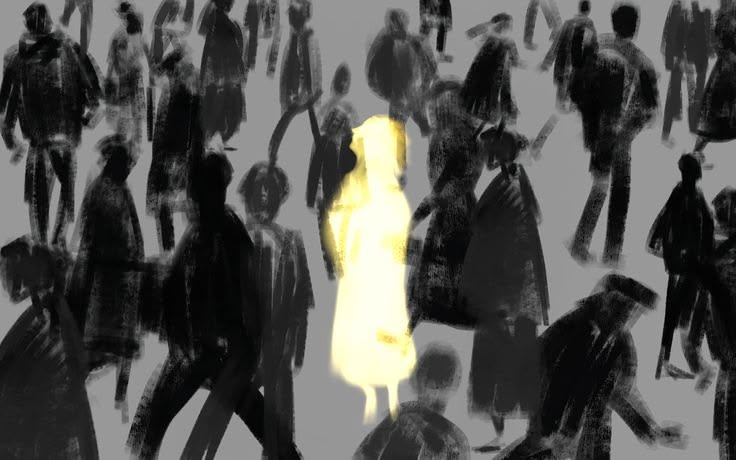
Four years of high school, years of undergrad, then four years of grad school. Society trains young minds to be ready for the corporate world, working a nine-to-five in an office cubicle on the 54th floor of a grey, gloomy building.
You sit here at the beginning of two pathways: be sure of what you want at the age of seventeen, to live this drilled life of promised security, or explore your mind, your creativity, and be who you are truly meant to be. You’re not certain if, in thirty years, you’ll be lying at night before work, wondering what your life would be like if you chose the uncertainty. And what if you are “wasting” your twenties in med school, not because you want to, but just because your parents have this expectation that only doctors live respected lives, or 80, in the nursing home, telling your grandchildren to live your dreams through theirs.
Freshman year of high school, you feel like you are reborn into a world you don’t know. In the first month, you realize how different this is from anything you have experienced, and by the end of the first semester, you wish middle school had prepared you for more. You didn’t listen when they said high school would be harder, would give you more homework, and that it would not slow down for you. You end up with a 3.0 GPA, and you experience something you’ve never experienced before; something that crushes your ego yet pushes you to want to become better. But only because you have this feeling that you need to prove something, that society tells you that you will be nothing.
Sophomore year is when you actually take things more seriously. Your family tells you that you don’t have much more time to get “ready” for the “real world.” You spend countless hours reviewing class materials over and over again. You pay $50 an hour for your tutor to tell you the same thing your teacher did, and you still cannot comprehend enough to get the satisfaction of an A+ on your exam. You blame yourself and say that you haven’t worked hard enough — that you just aren’t smart enough. And because of that, you believe that your future is set for failure, since it doesn’t align with what was already expected. You scroll online and see all these videos of kids your age, even younger, winning awards on subjects you didn’t even know existed or getting into summer programs at elite schools that you thought were untouchable at your age. You sit there and reflect on what you should have done differently. Maybe if you had realized how important high school is in shaping your future, then maybe you would have taken it more seriously. You still have two more years to figure out what you want, yet it feels like you should have already known years ago.
At the family gatherings, you hear everybody talk about their achievements: internships they have landed, the colleges they got into, but most importantly, the confidence in their voice about what their future has in store for them. Then they ask you what you plan on doing in the future. You think it’s nonsensical that this is a question being asked to someone who hasn’t even lived out their life. You have two options that determine the way that this conversation will go, you can say “I want to follow my dreams,”, and they’ll laugh at you, saying to think of something more practical, or sarcastically say “in this economy?” Or just tell them the generic answer that they want to hear, that you decide to say: “Whatever pays me the most.”
But do you really want to sell your life for cash, and always wonder the big question, “what if”? You spent countless hours researching and wondering what you want to be, what you want to do, just because everybody thinks that you should have known already. Then you start to think that you’re too far behind, but the truth is, it wasn’t something that you had to have stressed about in the first place. Youth, education, and guidance are something that shouldn’t be utilized to build you into this version of yourself that you think you already know the outcome of, since in truth, that’s not really you speaking. Instead, it should help you learn and find who you’re truly meant to be, as long as you can explore all the possible versions of yourself you could be.
Authors Note:
This commentary focuses on the social norm of knowing what the future has in store for you, imposed on teens. Inspired by my own experience of feeling behind, I realized how fast-paced everyone around me is in terms of education, experience, and understanding. It seemed like everyone knew what they were meant to do, except me. I hope that readers who relate to this feeling acknowledge that it’s an unjust standard to be expected of so much, and recognize this is the time when we should be exploring and learning new things to grow into ourselves.
Written by Sonam Lhaki Sherpa
Vol 03: Absurdity


Leave a Reply